
 Snowflake
 Databricks
 BigQuery
 Redshift
 PostgreSQL
 Azure Synapse
 ClickHouse
 DuckDB
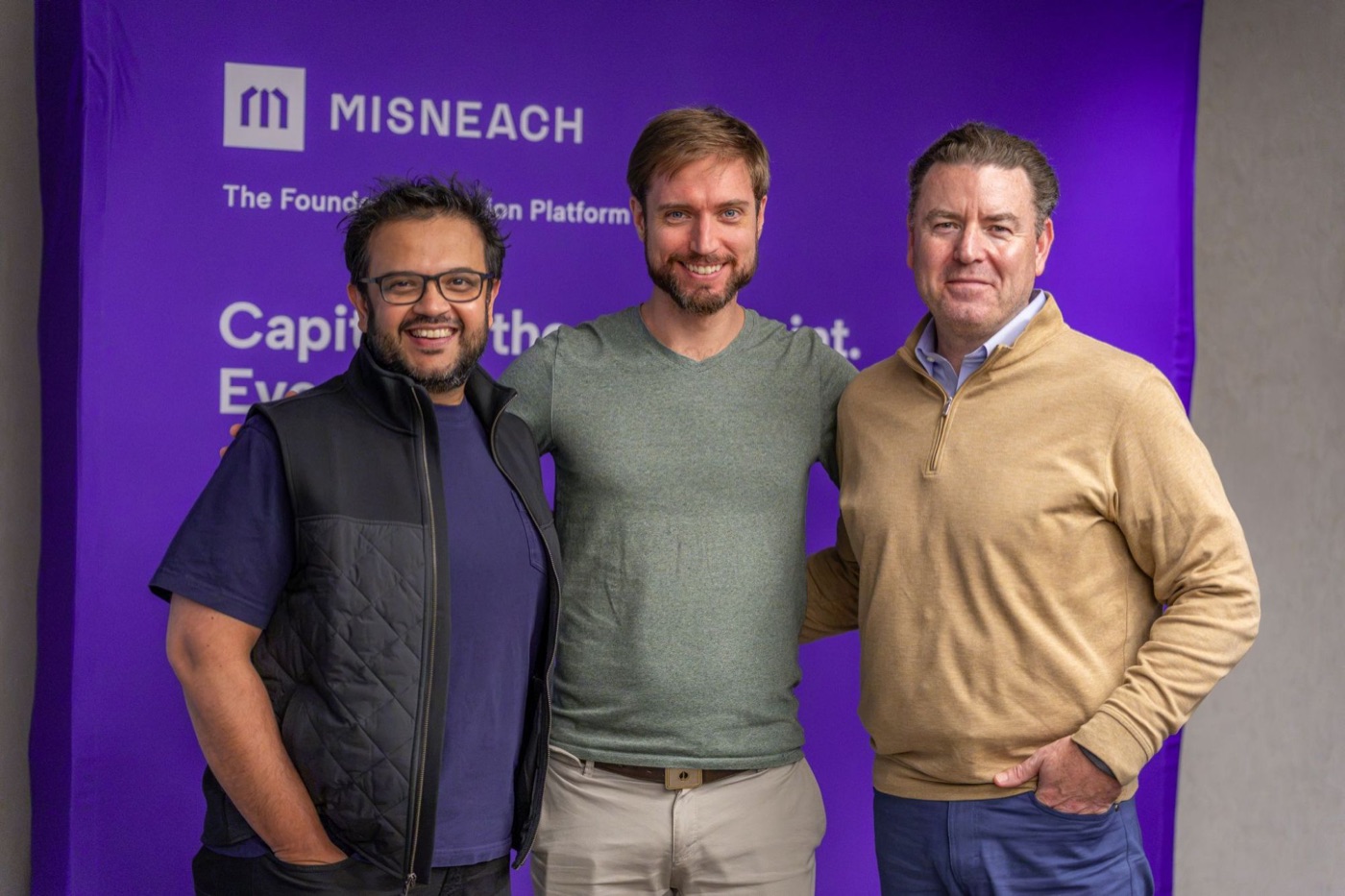 ekai raises $1.7MBacked by Misneach and C10 Labs. Yahoo Finance ↗
What do semantic layer, data product and AI-ready data mean?
Your company's definitions written down, so every tool and AI agent reads the same meaning.
The work of writing down what your data means: definitions, rules and relationships.
When an AI states a number or fact that is not true, often because it guessed what a term means.
One area of your business, like sales or finance, written down so AI understands it.
A named person approves each definition before any AI tool uses it.
A dataset built for one business use and packaged with its definitions, the code that builds it, the tests that check it and a named owner, so people and AI agents can rely on it.
Data whose meaning is written down, verified and owned, so an AI agent can answer from it without guessing. Tables alone are not enough: the agent also needs the definitions, the relationships and the business rules.
Common questions
Last updated October 28, 2026
What is ekai?
ekai is the systems of intelligence layer between your data and your AI agents. ekai learns what your data means by asking the experts who know it, proves every definition against your warehouse, and publishes it with their name on it, so a data product goes from an idea to production in hours, not months.
Who is ekai for?
Data teams who own the warehouse, the domain experts who hold the definitions, and the business users who ask the questions. Data teams get semantic models and dbt pipelines without a months-long modeling engagement. Experts answer in plain language, and only about what the data cannot explain on its own. Business users ask in chat and get answers that carry the same definitions everywhere. Nobody needs to write YAML to take part.
How does ekai work?
ekai works in six steps. Discovery: connect, model the structure and draw the architecture plan. Then semantics and ontology: generate, verify and publish. For example, the Business Requirements agent asks your finance lead whether AMOUNT is gross or net of tax and discount, ekai checks the answer against your warehouse, and only then publishes the definition to your AI tools.
How do I know the model is right?
Nothing ships unchecked. Each definition becomes a Data Validation rule with an expected result, the read-only ekai reviewing agent gives a binding verdict, and the Data Transformation agent asks for your approval before anything publishes. Schema tests, validation rules and documentation are generated with the model rather than bolted on afterwards, and every inferred relationship, definition and metric is reviewed by your people, with ekai showing its evidence and taking correction.
Why shouldn't AI calculate numbers?
Because AI is probabilistic, so asked the same question twice it can work out two different numbers. ekai keeps the calculation deterministic: your warehouse calculates every number from a governed definition, the same way every time, and AI uses that number to reason, explain and answer in plain language.
Does my data ever leave my environment?
Your raw rows never leave your warehouse. Discovery reads your tables in place, Semantics builds its dbt models into its own ekai schema, separate from your source tables, and ekai works from metadata and statistical summaries, which the privacy policy covers when they go to an AI provider. You can run ekai self-hosted, as ekai SaaS or as a Snowflake Native App, listed on the Snowflake Marketplace, and model traffic can route privately through your own Vertex AI, Azure OpenAI or Bedrock endpoints. More detail is on our security page.
Which platforms does ekai support?
Snowflake, Databricks, BigQuery, Redshift, PostgreSQL, Azure Synapse, ClickHouse and DuckDB. Data connection, profiling, ERD generation and dbt execution work across all eight; native semantic agent integration covers Snowflake, Databricks and BigQuery today, and ClickHouse is a manual step. Finished models publish to Snowflake semantic views and Cortex Agents, Databricks Genie, BigQuery data agents, or dbt MetricFlow for Postgres and Redshift.
What do I actually get, and can I keep it?
Open, portable artifacts: a standard dbt project, and the AI Modeling artifacts, which are the business glossary, lineage, data catalog, metrics and data validation rules. Every artifact is versioned to your own GitHub, GitLab or Bitbucket, under your review process and your audit trail. ekai has no warehouse to lock you into and no incentive to model toward one vendor's stack, so use ekai to build these and keep them for good.
How long does it take to get value?
Hours, not months. Documenting what your people already know the manual way runs months and six figures, and by delivery the business has moved on. A first engagement with ekai is deliberately small. After a discovery call and a demo on sample data, the pilot takes one domain and three business questions and leaves you with a reviewed model, the pipeline that builds it, and the tests that prove it.
Does ekai replace a forward deployed engineer?
Yes, for the data work. A forward deployed engineer, or FDE, is the engineer a vendor sends in to wire AI into your data: profiling tables, mapping how they connect, interviewing your experts and writing the definitions. That usually takes three to five months. ekai automates it end to end on top of your warehouse, without an FDE.
How fast can ekai create a data product?
ekai takes a data product from an idea to production in hours, not months. About 90% of traditional time to value goes to discovery and profiling, relationship mapping and the business rules and definitions, which is the work ekai automates with your experts. A full end-to-end discovery and semantics workflow takes 4 to 6 hours at minimum with ekai. Secunetics built its production dbt pipeline with ekai in 6 hours.
More questions on each page: