
 Snowflake
 Databricks
 BigQuery
 Redshift
 PostgreSQL
 Azure Synapse
 ClickHouse
 DuckDB
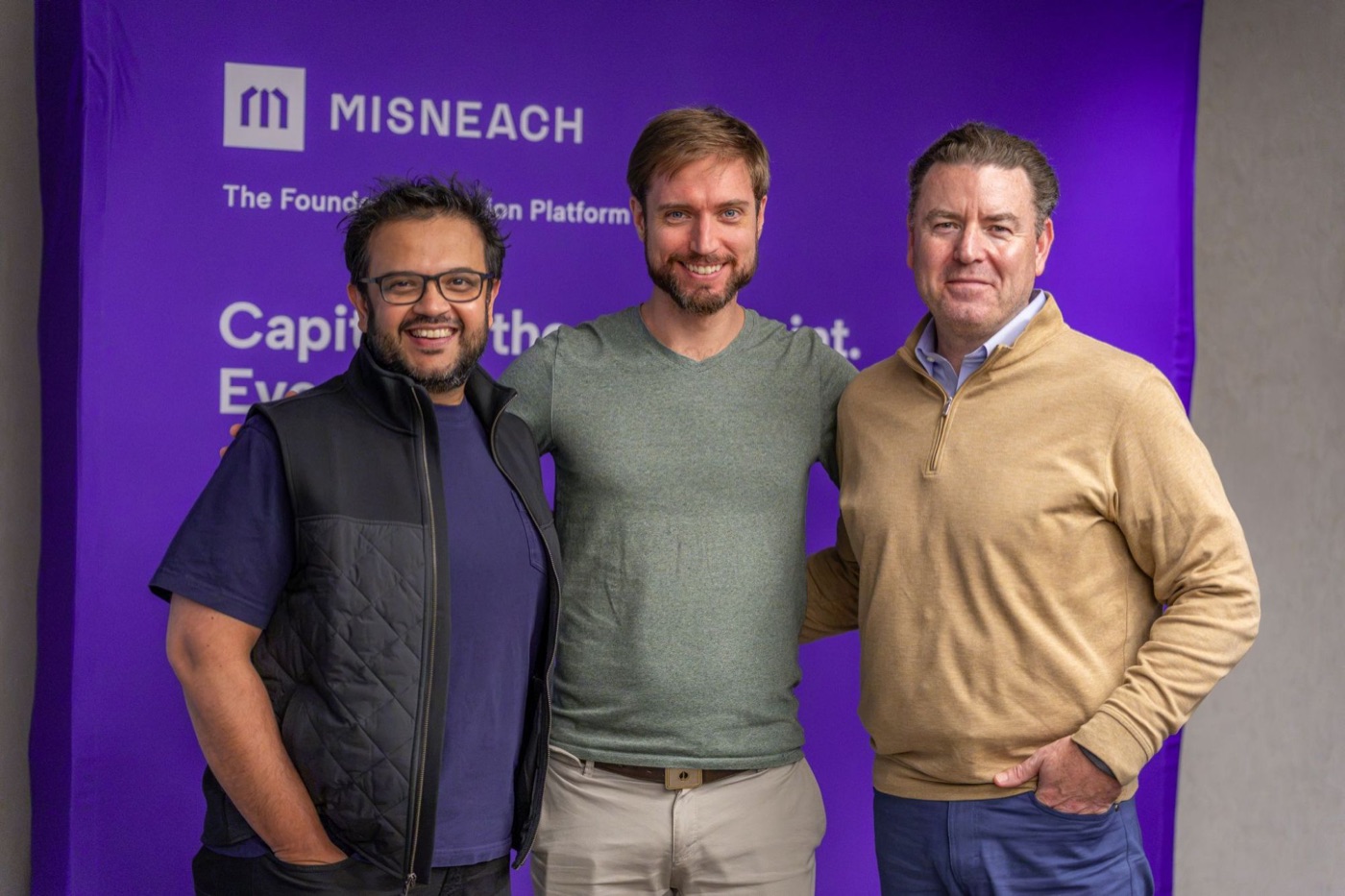 ekai raises $1.7MBacked by Misneach and C10 Labs. Yahoo Finance ↗
Semantic layers, context engineering and trustworthy AI on enterprise data.
Every common question, answered in one place.
Definitions
Your company's definitions written down, so every tool and AI agent reads the same meaning.
The work of writing down what your data means: definitions, rules and relationships.
When an AI states a number or fact that is not true, often because it guessed what a term means.
One area of your business, like sales or finance, written down so AI understands it.
A named person approves each definition before any AI tool uses it.
A dataset built for one business use and packaged with its definitions, the code that builds it, the tests that check it and a named owner, so people and AI agents can rely on it.
Data whose meaning is written down, verified and owned, so an AI agent can answer from it without guessing. Tables alone are not enough: the agent also needs the definitions, the relationships and the business rules.
What is a semantic layer?
A semantic layer is your company's definitions written down in one governed place, such as what counts as revenue or an active customer, so every tool and AI agent reads the same meaning. Without one, three AI tools asked for last quarter's net revenue can return three different numbers, because each one guesses the definition. ekai builds that semantic layer for you: it profiles your warehouse, captures your experts' definitions and publishes verified semantic models to your AI agents.
More on the home pageWhy does my AI give different answers to the same question?
Your AI gives different answers because the definition behind the number was never written down, so it guesses what a term like net revenue means each time it is asked. ekai stops the guessing: it turns your expert's answers into one verified definition, checks it against your warehouse, and every tool reads the same one.
More on the home pageWhat is ekai?
ekai is the systems of intelligence layer between your data and your AI agents. ekai learns what your data means by asking the experts who know it, proves every definition against your warehouse, and publishes it with their name on it, so a data product goes from an idea to production in hours, not months.
More on ekai for SnowflakeWhat is a meaning gap in data?
A meaning gap is the distance between the numbers in your data and what they mean to your business. AI falls into it when definitions were never written down.
More on The problemDoes a bigger model fix hallucinations on business data?
No. A bigger model still has to guess what your company means. Written, verified definitions remove the guess.
More on The problemIs text-to-SQL enough to make AI accurate?
No. Writing a query is the easy part. Knowing which definition the query should use is the hard part.
More on The problemHow can I tell if my AI agent is guessing?
Ask it for the definition behind the number and who declared it. If it cannot show them, it is guessing.
More on The problemWho should own a business definition?
The person or team accountable for that number, such as Finance for revenue. ekai records them as the owner.
More on The problemWhat is the Discovery workflow?
Discovery is the first of ekai's two workflows. It connects to your warehouse, profiles your data in place, asks your experts about anything the data cannot explain, and produces a reviewed entity model: keys, relationships, documentation and an entity relationship diagram.
More on WorkflowsWhat is the Semantics workflow?
Semantics is ekai's second workflow. It turns your experts' answers into a semantic model, then generates the dbt code, tests and documentation, checks every definition against your warehouse, and publishes the approved model to your AI agents.
More on WorkflowsWhat is context engineering?
Writing down what your data means, such as definitions, rules and relationships, so AI can use it correctly.
More on Why ekaiWhat are Build, Enable and Migrate?
They are the three ways teams start with ekai. Build turns a new business need into a trusted data product in hours. Enable pushes the context authored in ekai out to every AI agent your teams use. Migrate keeps your business logic when you switch platforms.
More on SolutionsWhat is MCP?
The Model Context Protocol (MCP) is the open standard for connecting AI agents to tools and data. ekai uses it in both directions: as a server for AI apps and as a client for your sources.
More on ekai MCPRead the transcript
ekai learns your business from your experts, then proves it. A lot of AI projects are failing because enterprises do not have production-ready semantic models in place. Now, in order to get that, that requires automatic semantic modeling at the heart of what ekai does. ekai profiles your warehouse, captures all the tribal knowledge that exists in the heads of your business users, and then gets your data ready so that your AI agents can actually work in production.
More on the home pageWhy shouldn't AI calculate numbers?
Because AI is probabilistic, so asked the same question twice it can work out two different numbers. ekai keeps the calculation deterministic: your warehouse calculates every number from a governed definition, the same way every time, and AI uses that number to reason, explain and answer in plain language.
More on the home pageHow fast can ekai create a data product?
ekai takes a data product from an idea to production in hours, not months. About 90% of traditional time to value goes to manual data and context engineering: discovery and profiling, relationship mapping and the business rules and definitions, which is the work ekai automates with your experts. A full end-to-end discovery and semantics workflow takes 4 to 6 hours at minimum with ekai. Secunetics built a fully documented dbt pipeline with ekai in 6 hours.
More on the home pageHow can I build data products faster?
ekai turns a new business need into a trusted data product in hours, not months. It maps your data, learns the rules from your experts, and builds a dbt project you own.
More on How ekai worksWhat access does ekai need?
Read access for Discovery, which profiles the tables you link in place. To build semantic models, write access for its own ekai schema, separate from your source tables, where the Data Transformation agent creates its models. ekai never edits your source tables.
More on How ekai worksWho approves what ekai builds?
Your people. Inferred relationships, definitions and metrics are reviewed, and the Data Transformation agent stops at approval checkpoints before it builds and before it publishes.
More on How ekai worksWhere do the outputs live?
In your own Git, as a standard dbt project pushed from Code Sync to GitHub, GitLab or Bitbucket.
More on How ekai worksHow long does it take ekai to build a semantic model?
A full Discovery and Semantics run on one domain takes about 4 to 6 hours, against months of manual data and context engineering.
More on WorkflowsDoes ekai need my experts to write code?
No. ekai asks your experts plain questions about what the data means. Your data engineers review the generated dbt code and tests instead of writing them from scratch.
More on WorkflowsWhere do ekai's semantic models get published?
To Snowflake semantic views and Cortex Agents, Databricks Genie and BigQuery data agents, or to dbt MetricFlow for Postgres and Redshift. The dbt project goes to your own Git.
More on WorkflowsWhy do enterprise AI projects fail?
Most fail because they lack business context: the AI does not know what your numbers mean.
More on Why ekaiHow fast can ekai build a semantic model?
In hours, not months. A full discovery and semantics run on one domain takes about 4 to 6 hours. Secunetics built its production dbt pipeline with ekai in 6 hours. By hand, a similar pipeline had taken them well over 96 hours.
More on CustomersHow much can my company save using ekai to build a semantic model?
Secunetics built its pipeline with ekai for $56. Building a similar dbt pipeline by hand had cost them about $26,400. In Allen Chen's words, that was less than 1% of the expected cost and 5% of the anticipated time. Your savings depend on how many domains you model.
More on CustomersDoes ekai replace data engineers?
No. ekai automates the manual data and context engineering, and your data engineers review and approve the generated models, code and tests before anything ships.
More on CustomersHow do I enable AI agents with my business context?
Context authored in ekai is pushed out to every AI agent your teams use: general purpose agents, tools and your own custom agents, as well as Snowflake, Databricks and BigQuery agents.
More on SolutionsDo I need to start with Build?
No. Start with the step that matches your need today. All three share one data foundation, so the context you capture in one carries into the others.
More on SolutionsHow do I get started?
Book a demo. It starts with a discovery call and a demo on sample data, then a pilot on one domain of your own data.
More on SolutionsHow does ekai work?
ekai works in six steps. Discovery: connect, model the structure and draw the architecture plan. Then semantics and ontology: generate, verify and publish. For example, the Business Requirements agent asks your finance lead whether AMOUNT is gross or net of tax and discount, ekai checks the answer against your warehouse, and only then publishes the definition to your AI tools.
More on the FAQHow do I know the model is right?
Nothing ships unchecked. Each definition becomes a Data Validation rule with an expected result, the read-only ekai reviewing agent gives a binding verdict, and the Data Transformation agent asks for your approval before anything publishes. Schema tests, validation rules and documentation are generated with the model rather than bolted on afterwards, and every inferred relationship, definition and metric is reviewed by your people, with ekai showing its evidence and taking correction.
More on the FAQWhat do I actually get, and can I keep it?
Open, portable artifacts: a standard dbt project, and the AI Modeling artifacts, which are the business glossary, lineage, data catalog, metrics and data validation rules. Every artifact is versioned to your own GitHub, GitLab or Bitbucket, under your review process and your audit trail. ekai has no warehouse to lock you into and no incentive to model toward one vendor's stack, so use ekai to build these and keep them for good.
More on the FAQWhat happens after I get in touch?
First a discovery call about your goals, your questions and your stack. Then, in a separate second call, a demo of ekai on sample data. Once an NDA is in place, a pilot runs on your own data, starting with one domain.
More on booking a demoWhich AI apps work with ekai MCP?
Claude, ChatGPT, VS Code and Cursor, once the MCP server is released. You add the MCP server URL from Connected Apps on your ekai home page, then switch MCP on for each model. As connectors, Google Drive, Notion and Atlassian are live, and more connectors are on the way.
More on ekai MCPWhen can I use it?
The Google Drive, Notion and Atlassian connectors are live today. The MCP server is coming soon. Book a demo and we will walk you through both with your own stack.
More on ekai MCPHow does ekai build a semantic model?
In six steps. Discovery: it connects, models the structure with the Onboarding Agent and draws the architecture plan with the Schema Agent. Then semantics and ontology: it generates the model with your experts, verifies it and publishes it.
More on /modeling-methodDoes ekai use query history?
No. ekai learns from your data and your experts rather than mining query history.
More on /modeling-methodWhere does ekai publish semantic models?
To Snowflake semantic views and Cortex Agents, Databricks Genie, BigQuery data agents, or dbt MetricFlow for Postgres and Redshift, plus a dbt project in your own Git.
More on /modeling-methodHow does ekai drive AI agent accuracy?
ekai gives every AI agent the same verified definition. Your expert authors what each number means, ekai checks the definition against your warehouse before anything ships, and your warehouse calculates the number. The agent uses that number to reason and answer, so it never has to guess the meaning or calculate the number itself.
More on AI agent accuracyWho decides what a number means?
The person on your team who already knows. ekai asks your expert only what the data cannot explain, in plain language and grounded in your real tables. Their answer becomes the definition, they are recorded as its author, and nothing goes live until a person on your team has reviewed it.
More on AI agent accuracyHow do I know an agent's answer is verified?
Every definition can be traced back to the warehouse. ekai runs each check inside your warehouse and reconciles it against facts your experts stated up front. If a check fails, the definition does not go live, so nothing gets shipped unverified, and every answer arrives with its definition and its author.
More on AI agent accuracyWhich AI agents does ekai work with?
Every agent your teams use. ekai publishes one verified semantic model to general purpose agents such as Claude and ChatGPT, to tools and your own custom agents through ekai MCP, and to Snowflake semantic views and Cortex Agents, Databricks Genie and BigQuery data agents, or dbt MetricFlow for Postgres and Redshift. The dbt project goes to your own Git.
More on AI agent accuracyDoes ekai work with Snowflake Cortex Analyst?
Yes. ekai publishes governed semantic models as Cortex Analyst semantic views, so Cortex Analyst, Cortex Agents and Snowflake CoWork answer from the definitions your experts authored and ekai checked against your warehouse.
More on ekai for SnowflakeHow do I install ekai in Snowflake?
ekai is a Snowflake Native App, listed on the Snowflake Marketplace. It runs in your own account, and setup needs ACCOUNTADMIN. ekai is also available as ekai SaaS or self-hosted.
More on ekai for SnowflakeWhat permissions does ekai need in Snowflake?
Discovery needs read access. To build semantic models, the Data Transformation agent needs write access to create its own ekai schema, separate from your source tables, where it builds staging views and mart tables. ekai never edits your source tables, and it runs under your roles, your warehouses and your access policies.
More on ekai for SnowflakeDoes my data leave Snowflake?
Your raw rows never leave your Snowflake environment. ekai works from metadata and statistical summaries, and the privacy policy sets out what can be shared with the AI providers you use.
More on ekai for SnowflakeWhat leaves my environment?
Your raw rows never leave your warehouse. ekai works from metadata and statistical summaries, and the privacy policy sets out what can be shared with the AI providers you use.
More on How ekai worksHow does ekai profile the data in my warehouse?
Read-only, and in place. ekai connects to your warehouse with read access, profiles the tables you link and maps their keys and relationships. Your raw rows stay in your warehouse and ekai never edits your source tables.
More on WorkflowsDoes ekai move or copy my data?
No. Discovery profiles your tables in place, and the dbt models are built inside your own warehouse, in an ekai schema, separate from your source tables. Your raw rows never leave your warehouse; ekai works from metadata and statistical summaries.
More on Governance and securityWhere does ekai run?
Self-hosted, as ekai SaaS or as a Snowflake Native App, listed on the Snowflake Marketplace. Discovery reads only, Semantics writes its dbt models to its own ekai schema, separate from your source tables, and your raw rows stay in your warehouse.
More on Governance and securityIs my data safe with ekai?
Yes. Discovery reads only, ekai never edits your source tables, and your raw rows never leave your warehouse. AI traffic can route through your own endpoints, your data is never used to train models, and ekai's SOC 2 Type II audit found zero exceptions.
More on Governance and securityIs ekai SOC 2 compliant?
Yes, SOC 2 Type II. Request the report from the team, or read the announcement for what the audit covered.
More on Governance and securityWhich data platforms does ekai support?
Eight: Snowflake, Databricks, BigQuery, Redshift, PostgreSQL, Azure Synapse, ClickHouse and DuckDB.
More on IntegrationsDoes ekai work with Databricks Genie?
Yes. ekai publishes governed metric views that Genie queries directly.
More on IntegrationsHow do I keep the business logic when I switch platforms?
Years of business logic sit in legacy semantic models and BI apps. ekai rebuilds those models on your new warehouse, so the business logic carries over.
More on SolutionsIs my data safe when I use ekai MCP?
MCP is off until a workspace owner turns it on, and each model is shared only when its owner switches MCP on, and only with people who already have access to it. Apps sign in as a person through OAuth, so there are no shared API keys. Their access is read-only: every query must be a single read-only SELECT. Query results go to the app you connected, with personal-data columns masked. Sessions expire after an hour, and you can disconnect any app from Connected Apps, or revoke all connections at once in Settings.
More on ekai MCPDoes ekai replace a forward deployed engineer?
Yes, for the data work. A forward deployed engineer, or FDE, is the engineer a vendor sends in to wire AI into your data: profiling tables, mapping how they connect, interviewing your experts and writing the definitions. That usually takes three to five months. ekai automates it end to end on top of your warehouse, without an FDE.
More on the home pageWhere do these customer results come from?
From the customers themselves, in their own words. The Secunetics figures are from Allen Chen's recorded testimonial.
More on CustomersWho founded ekai?
Mo Aidrus (CEO), Hussnain Ahmed (Chief AI Officer) and Tero Miikki (Chief Commercial Officer).
More on About ekaiWhere is ekai based?
Cambridge, Massachusetts.
More on About ekaiHow is ekai funded?
ekai raised $1.7M from Misneach and C10 Labs.
More on About ekaiWho is ekai for?
Data teams who own the warehouse, the domain experts who hold the definitions, and the business users who ask the questions. Data teams get semantic models and dbt pipelines without a months-long modeling engagement. Experts answer in plain language, and only about what the data cannot explain on its own. Business users ask in chat and get answers that carry the same definitions everywhere. Nobody needs to write YAML to take part.
More on the FAQHow do I contact ekai?
Email sales@ekai.ai for demos and pricing, or support@ekai.ai for product support.
More on booking a demoNo answers match that yet. Ask the team or try Ask ekai.