 Snowflake
 Databricks
 BigQuery
 Redshift
 PostgreSQL
 Azure Synapse
 ClickHouse
 DuckDB
 ekai raises $1.7MBacked by Misneach and C10 Labs. Yahoo Finance ↗
The number was never missing. The definition was
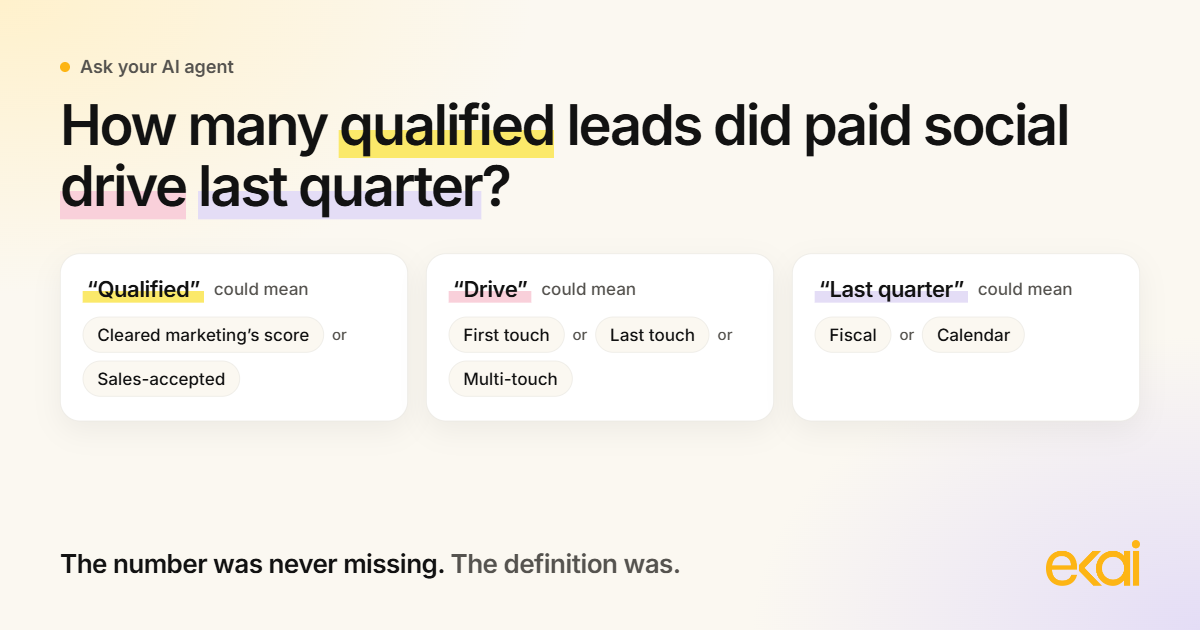
Ask an AI agent how many qualified leads paid social drove last quarter and you’ll get a confident answer. The question hides at least three definitional choices, and the agent has an opinion on none of them — so it guesses, differently each week.
TL;DR Ask an AI agent a business question and it answers confidently, because it has quietly guessed at every ambiguous term in the question. Warehouses bought storage and speed; nobody wrote down what “qualified lead” means or how attribution should be counted. Define the terms first, with the experts who own them, and verify every definition against the warehouse before an agent ships.
Try this with any AI agent your company is piloting. Ask it: “How many qualified leads did paid social drive last quarter?”
You’ll get a fast, well-formatted, confident answer. There’s a real chance it’s wrong.
That simple question hides at least three choices. A “qualified” lead might be one that cleared marketing’s scoring threshold, or one that sales actually accepted. “Drive” might mean first touch, last touch, or a multi-touch model. “Last quarter” might be fiscal or calendar. Your marketing ops lead has one definition, your head of sales has another, and the agent has neither. So it guesses, and next week it may guess differently.
Why AI pilots stall
When pilots stall, the usual fix is a bigger model or better prompts. But that treats a definition problem as a capability problem.
Companies have spent heavily on warehouses like Snowflake and Databricks. That bought storage and speed. It didn’t write down what “qualified lead” means or how attribution should be counted. The data is there; the meaning was never codified.
Gartner’s AIR framework splits the stack into three layers: a System of Action where agents sit, a System of Record where data sits, and a System of Intelligence in between, where business context lives. Budgets go to the top and bottom. The middle layer, the one that tells an agent what the data means, is usually empty.
Ask first, then verify
One shortcut is to point AI at old queries and dashboards and let it infer what your terms mean. It can only learn from questions someone already asked, and it tends to plateau in the mid-80s for accuracy, with no signal about which answers are wrong. Those inferred definitions also have no owner.
The approach that works is forward engineering. Start with the domain experts who know what the data means and treat their answers as ground truth. Then generate the semantic models, code, tests and documentation, and check every piece against the warehouse before it ships. Automate the capture of expert knowledge; don’t replace the experts.
Define the terms first
If your AI pilots keep stalling, don’t start by shopping for a smarter model. Ask whether anyone at your company owns the definitions your agents depend on. If no one does, that’s your bottleneck.
Define the terms, then deploy the agent. The number was never missing. The definition was.
ekai asks your expert, proves the answer and shares it with every tool.
See every step from raw tables to a verified model, or start with a discovery call about one domain and three business questions.
Keep reading
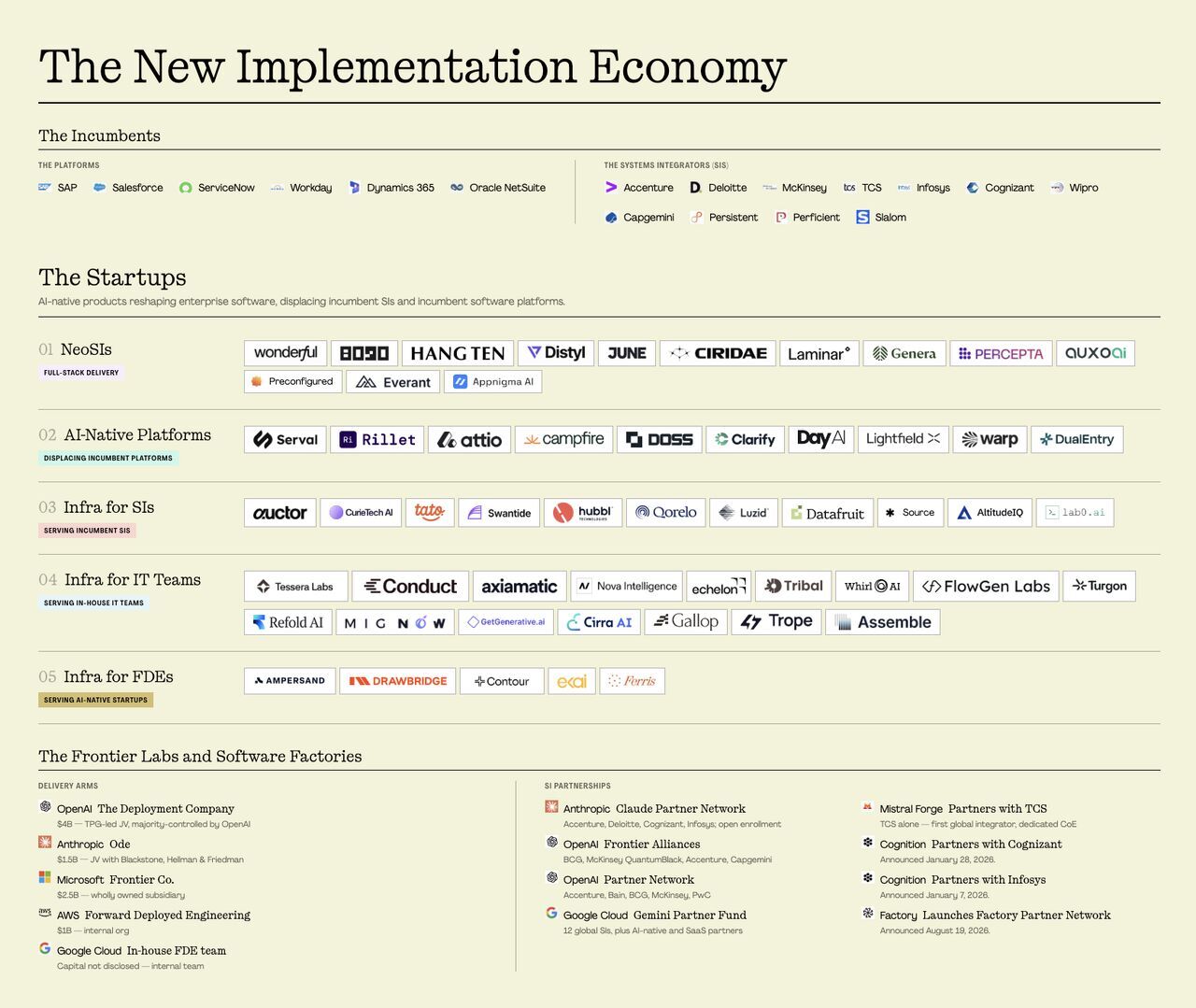 Announcement · Recognitionekai named to Innovation Endeavors’ map of the New Implementation EconomyReadAI accuracyAI Hallucination: Why AI Agents Get the Numbers WrongReadPerspective · Data governanceBuilding got cheap. Being wrong got expensiveReadAnnouncement · FundingWe raised $1.7M to fix enterprise AI’s meaning gapReadAnnouncement · Security and complianceekai achieves SOC 2 Type II compliance with zero exceptionsReadGuideHow enterprise AI uses semantic intelligenceReadGuideWhat is AI semantic modeling?Read