 Snowflake
 Databricks
 BigQuery
 Redshift
 PostgreSQL
 Azure Synapse
 ClickHouse
 DuckDB
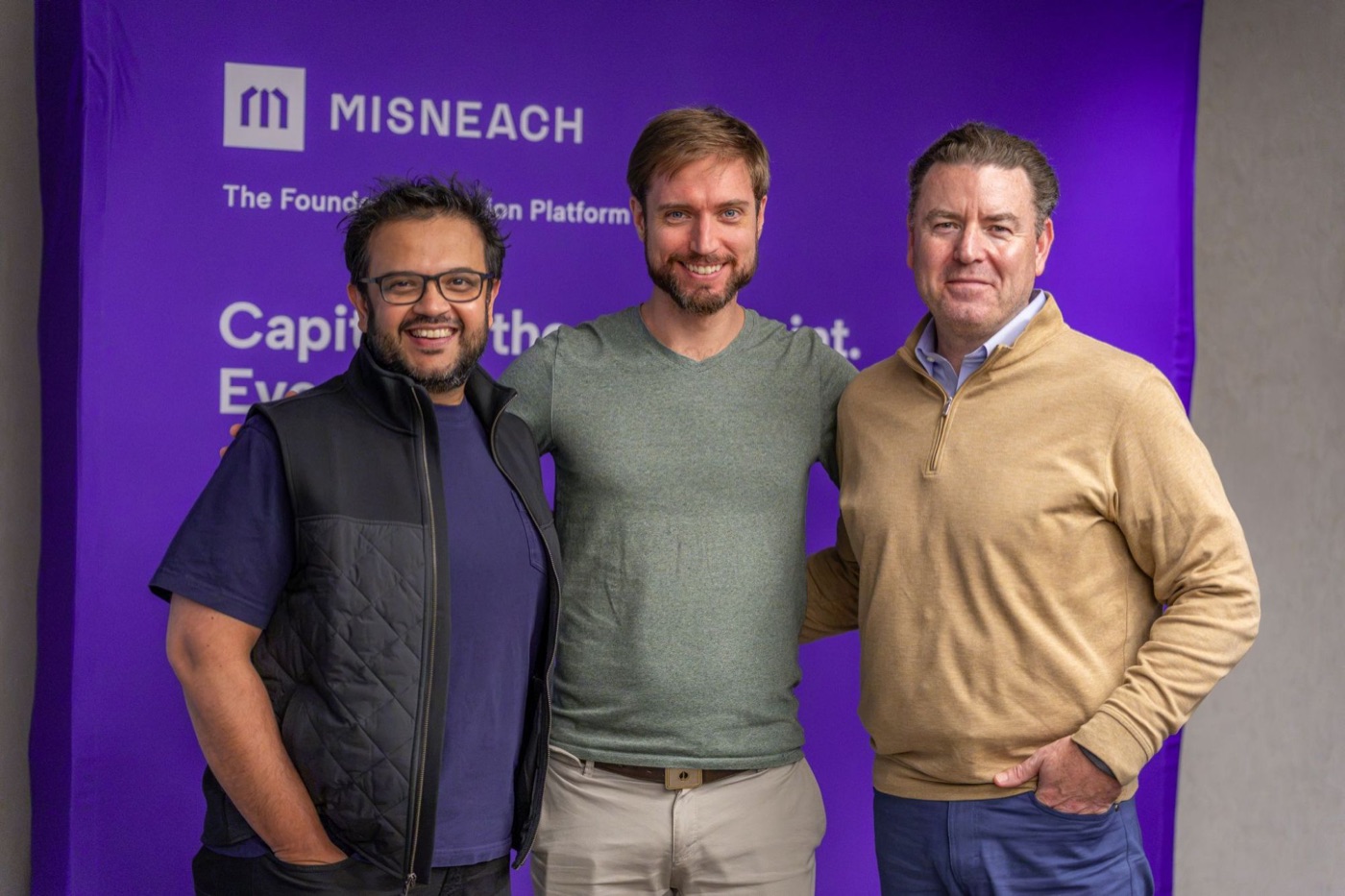 ekai raises $1.7MBacked by Misneach and C10 Labs. Yahoo Finance ↗
Trust in AI should be verifiable, not a leap of faith
Agents write SQL and summarize the business, but when someone asks how an answer was reached the reply is often “trust us”. Trust should be a property of the system — evidence in the answer, and evidence in the vendor.
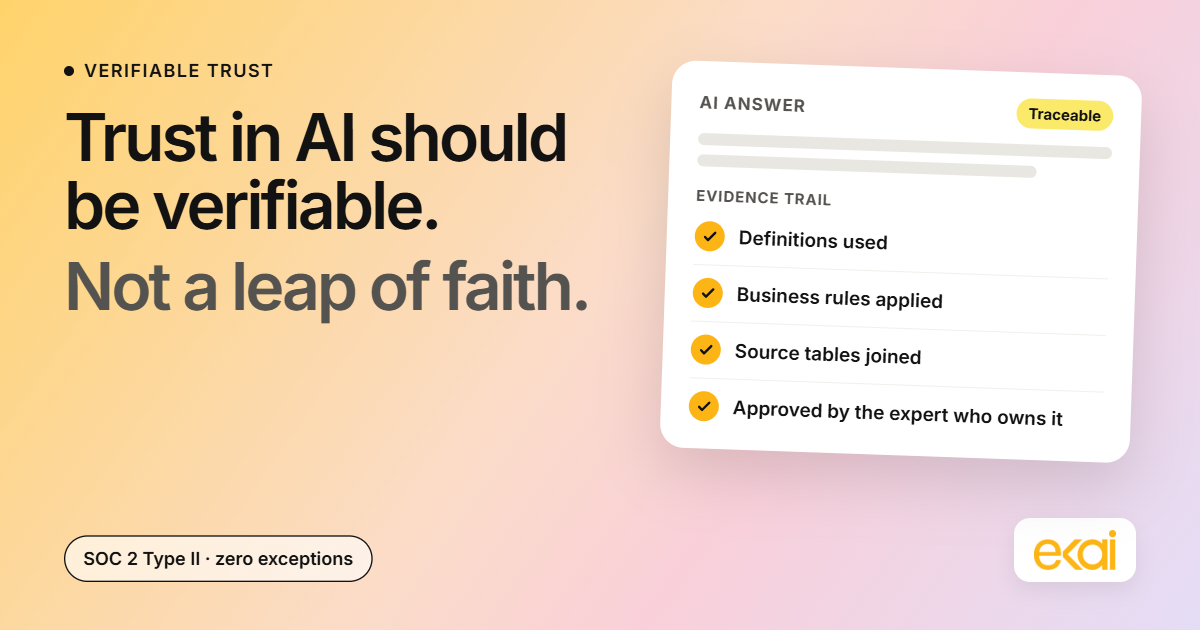
TL;DR Trust should be a property of the system, not a belief you are asked to hold. That needs evidence in two places: in the answer, where every definition and rule traces back to a named person who approved it, and in the vendor, where access, change review and incident handling are things you can audit rather than things you are assured about.
Every data platform is being asked to do more with AI. Agents now write SQL, answer revenue questions and summarize the business for executives. But when someone asks how an agent got its answer, the honest reply is often “trust us.”
That’s a leap of faith, and it’s not good enough. Trust should be a property of the system, not a belief you’re asked to hold. Verifiable trust needs evidence in two places: in the answer itself, and in the company that builds the system.
Evidence in the answer
Every AI-generated answer should carry its context: the definitions it used, the business rules it applied, and how different data sources were connected to produce it. Each of those should trace back to a person who approved it.
That starts before an agent ever answers a question. Interview the domain experts who own the definitions, reconcile what they say against what the data actually shows, and publish the governed model to the agents and catalogs the business already uses, with a named author and approval trail on every definition. Only metrics authored and verified by the experts who own them should reach an AI agent.
When an answer can be traced from the question back to the source, anyone can check it.
Evidence in the company
The second half of verifiable trust lives in the vendor. AI infrastructure providers sit inside sensitive environments, touch production data and ship changes constantly. Buyers should ask how access is controlled, how changes are reviewed and how incidents are handled. A vendor that answers with documents and logs is offering evidence. A vendor that answers with reassurance is asking for faith.
For a young company building AI infrastructure, an independent examination like SOC 2 Type II is one of the few ways to turn assurances into evidence. That’s why ekai pursued it early, and completed it with zero exceptions. Not because compliance is the goal, but because anyone building AI infrastructure owes customers proof, not promises. And the bar should rise with the stakes.
From faith to evidence
AI will keep feeling like a black box as long as the systems, and the companies behind them, ask for faith instead of offering evidence. Make every answer traceable and make the vendor auditable, and trust becomes something anyone can check.
ekai asks your expert, proves the answer and shares it with every tool.
See every step from raw tables to a verified model, or start with a discovery call about one domain and three business questions.
Keep reading
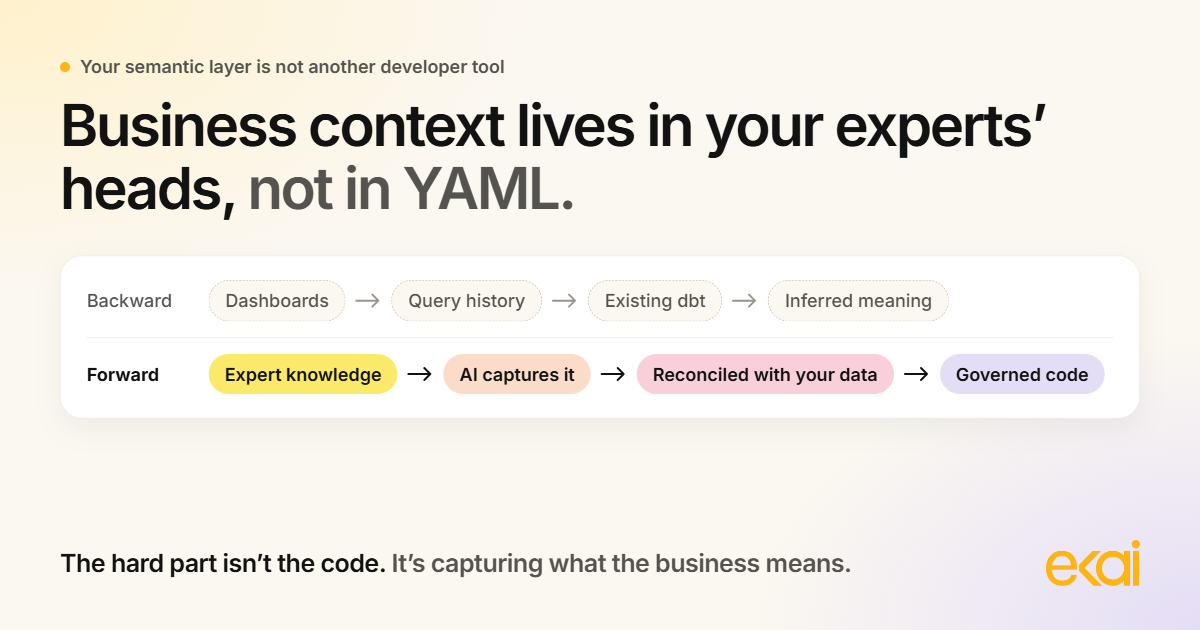 Perspective · Semantic layersYour semantic layer is not another developer toolRead
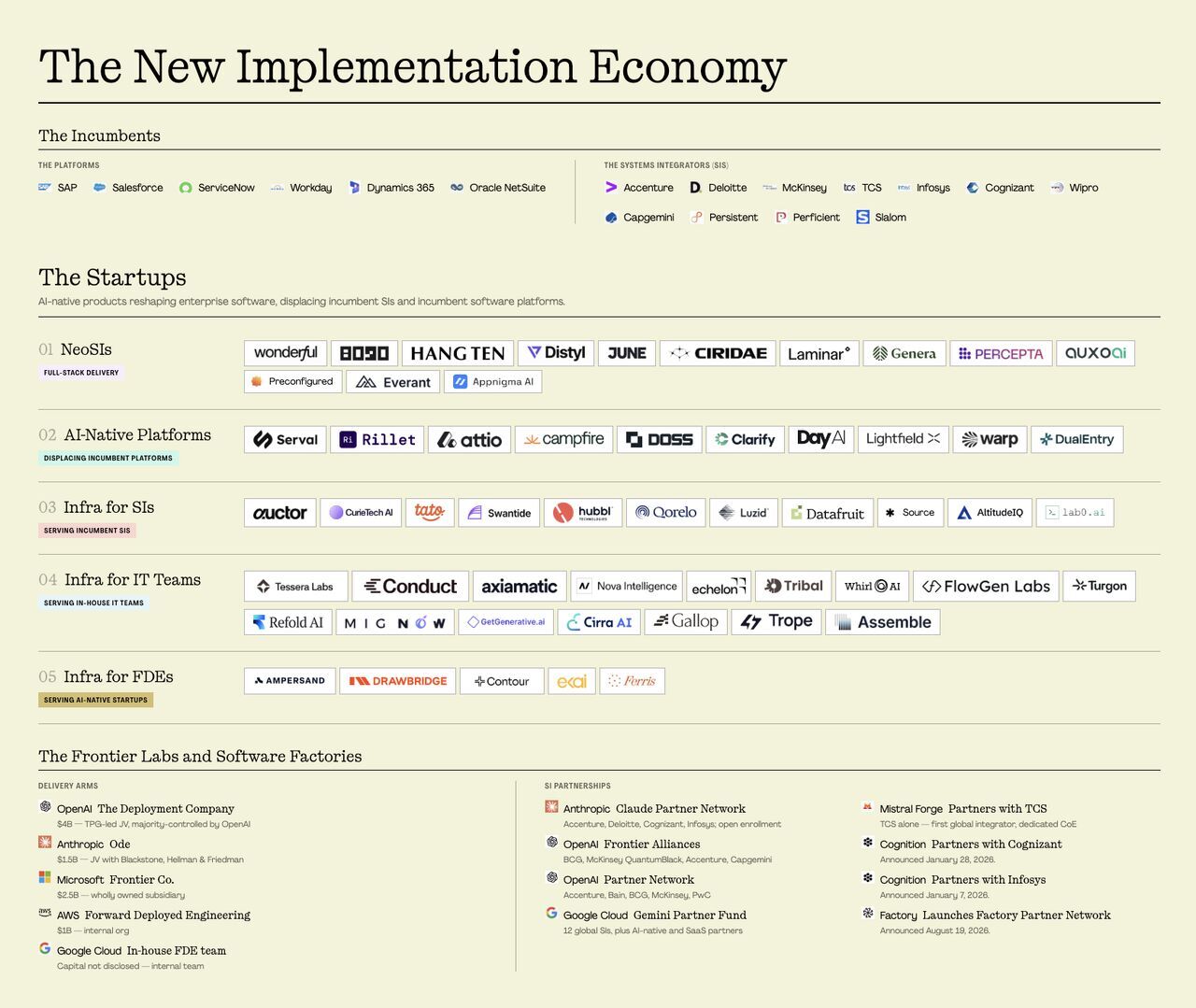 Announcement · Recognitionekai named to Innovation Endeavors’ map of the New Implementation EconomyRead
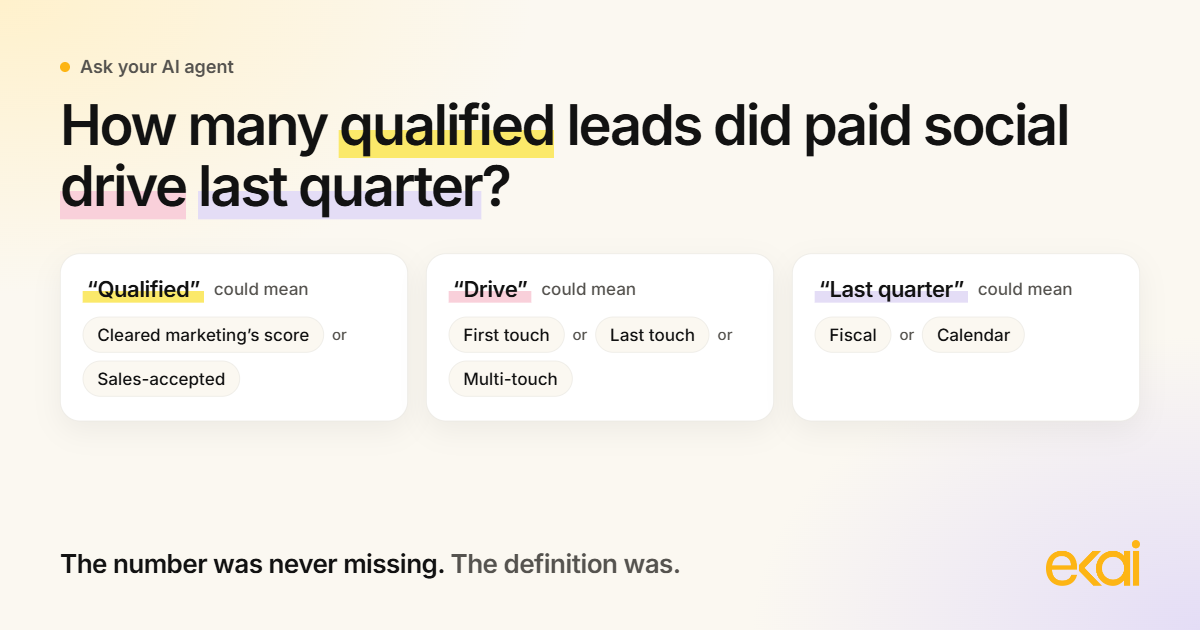 Perspective · AI adoptionThe number was never missing. The definition wasReadAI accuracyAI Hallucination: Why AI Agents Get the Numbers WrongReadPerspective · Data governanceBuilding got cheap. Being wrong got expensiveReadAnnouncement · FundingWe raised $1.7M to fix enterprise AI’s meaning gapReadAnnouncement · Security and complianceekai achieves SOC 2 Type II compliance with zero exceptionsReadGuideHow enterprise AI uses semantic intelligenceReadGuideWhat is AI semantic modeling?Read